Curcumin & Piperine — The Golden Pair That Powers Our Formulations
Category: Herbal Medicine
Dr Shantha Raman
12/30/2025

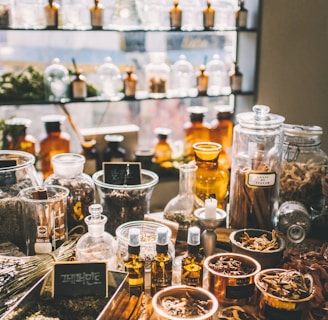
If there is one botanical compound that has captured the attention of cancer researchers worldwide, it is curcumin — the bright yellow active ingredient in turmeric. Thousands of studies have investigated its potential, and the findings are consistently intriguing. Yet for decades, curcumin faced one major obstacle: the body absorbed it poorly. Enter piperine — a compound from black pepper and Piper longum (long pepper) — which changed everything.
Curcumin: The Golden Healer
Turmeric has been used in Ayurvedic medicine for over 4,000 years. In classical texts, it is described as having anti-inflammatory, antibacterial, and digestive properties. Modern science has identified curcumin as the compound primarily responsible for these effects.
Laboratory research on curcumin has shown remarkable results. It acts as a potent anti-inflammatory agent, inhibiting key inflammatory pathways — including NF-κB, a molecular switch that is often overactivated in cancer cells. It is a powerful antioxidant, neutralizing free radicals that damage DNA. Perhaps most excitingly for cancer research, multiple laboratory studies have shown that curcumin can induce apoptosis — programmed cell death — in cancer cell lines, potentially triggering the self-destruction mechanisms that cancer cells have learned to evade. Research has explored curcumin's effects on breast cancer, colorectal cancer, pancreatic cancer, and more.
The Absorption Problem
Despite these promising laboratory findings, curcumin's journey from the dinner plate to the cancer cell is fraught with obstacles. When taken orally in standard form, curcumin is poorly absorbed in the gut, rapidly metabolized, and quickly eliminated. Studies showed that even large doses produced only very low levels of curcumin in the bloodstream — limiting its therapeutic potential.
This is where Ayurveda, as always, was centuries ahead of modern science.
Piperine: The Bioenhancer
Piper longum, known as Pippali in Ayurveda, contains piperine — a bioactive compound that has been shown to dramatically improve the absorption of curcumin. A landmark study showed that combining curcumin with piperine increased curcumin's bioavailability in humans by up to 2,000%. It achieves this by inhibiting certain metabolic enzymes and transporters in the gut that would otherwise break down and eliminate curcumin before it can be absorbed.
Piperine itself also carries anti-inflammatory properties and has been studied for its potential role in cancer biology. In classical Ayurvedic formulations, Pippali has long been included as an "anupana" — a carrier or enhancer that improves the efficacy of other herbs. Ancient physicians understood empirically what scientists confirmed only recently.
In Our Formulations
At Dr. Jain Cow Urine Ayurveda Centre, curcumin and Piper longum are combined in carefully calibrated ratios, drawing on classical Ayurvedic formulation principles to maximize bioavailability and therapeutic effect. They are part of a broader protocol tailored to each patient's individual needs and condition.
These formulations are complementary and should always be used alongside, not instead of, your prescribed cancer treatment.
Get in touch
Reach out anytime for guidance and support
Address
86949 46003
Dr. Jain Cow Urine Ayurveda Centre
No 25 .1st floor, Lady Curzon Road, Bowring Hospital Rd, Opposite to, Shivaji Nagar, Bengaluru, Karnataka 560001
Contacts